English
 Español
 Deutsch
 Italiano
 Português
 Japanese
 한국인
한국인 Türkçe
Authoritative Analysis: Fuse Temperature Rise Standards (UL248-13 & IEC60269-4) and Safety Design Trade-Offs
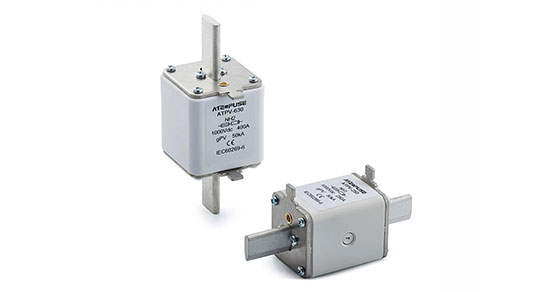
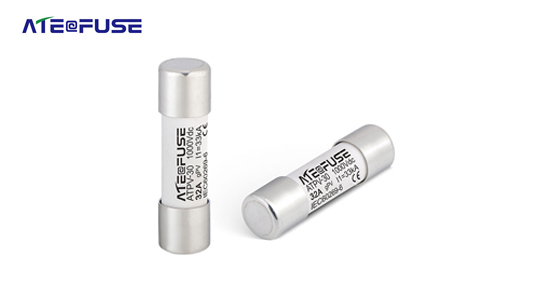
Fuse temperature rise—defined as the difference between a fuse's surface temperature and ambient temperature during operation—is a vital performance indicator. Excessive temperature rise can damage equipment and create serious safety risks, so manufacturers rigorously test and control it. At AITEFUSE, we provide UL- and TUV-authorized third-party lab testing for fuse parameters, reliability, and specialized equipment like X-ray inspection, 2D image measurement, resistance testing, and precise temperature rise analysis.
Meeting Global Requirements: Industry Standards and Limits for Fuse
Thermal Performance
Global standards such as UL248-13 (US), IEC60269-4 (EU), and GB13593.4 (China) set clear benchmarks for fuse thermal performance. For instance, UL248-13 requires that after stabilizing at rated current for one hour, the temperature rise at the fuse's metal terminals must not exceed 130K (measured temperature minus ambient). These tests ensure fuses meet semiconductor protection requirements. Below, we break down the key factors influencing temperature rise and their implications.
Core Factors Influencing Temperature Rise: Determining High vs. Low Thermal OutputSeveral elements determine a fuse's temperature rise during operation:
•Cold resistance(Rcold): Lower resistance reduces heat generation and power loss, leading to cooler operation.(P=I²R)
•Heat dissipation design: Material choices, surface area, and structure play a big role in releasing heat effectively.
•Operating current and stability: Higher or fluctuating currents generate more heat.
•Connected copper busbar specs: Smaller cross-sections or longer lengths increase resistance and warmth.
•Environmental conditions: Poor airflow or high ambient temperatures trap heat.
Pros, Cons, and Trade-Offs in Fuse Design
Optimizing fuse temperature rise involves balancing performance with safety. Here's how key factors interplay:
•Impact of cold resistance on electrical traits: Low resistance means lower temperature rise but slower fusing times. High resistance speeds up interruption (higher rise) for quicker protection.
•Core safety priorities: Standards like UL248-13, IEC60269-4, and GB13593.4 target fast-acting fuses for semiconductors. These must disconnect short-circuit currents (>10x rated In) within 10ms to prevent hazards. Chasing ultra-low temperature rise can delay fusing, risking failure to interrupt or even fuse explosion—a critical flaw.
•The tension between low rise and protection: Safety (interrupting faults reliably) trumps low heat. We prioritize protection first—ensuring fuses cut harmful currents safely—then minimize rise to meet standards (e.g., <130K) and typical working levels (50K-70K).
Achieving Excellence in Fuse Performance
Ultimately, fuses must excel in safety and protection above all. Low temperature rise is valuable but relative—not absolute. Lower rise often correlates with longer fusing times, so top-tier fuses strike the ideal balance: rapid, reliable interruption with controlled heat.
Trust our certified testing laboratory for comprehensive fuse temperature rise (TR) testing, ensuring compliance with key industry standards like UL 248-13 and IEC 60269-4. Contact AITEFUSE today to secure and protect your high-performance applications.